Book Appointment Now


How to Reduce Cat Stress During Visitors, Noise & Busy Home Days
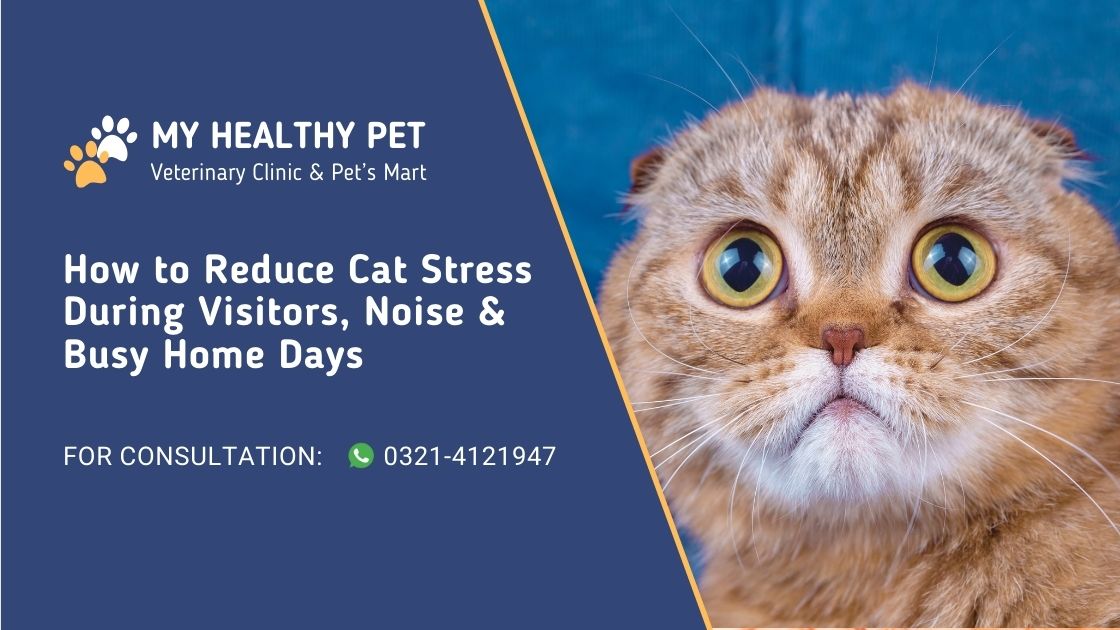
Cats love routine, familiar spaces, and quiet control of their environment. So when the doorbell keeps ringing, kids are running around, or the home suddenly gets louder than usual, many cats feel stressed even if everything looks “fine” to us. The good news is that with a few simple changes, you can help your cat feel safer and stay calm during busy days.
Why busy days feel stressful to cats
Cats rely heavily on scent, predictable movement, and quiet observation. Visitors, loud sounds, and extra activity can feel like a “territory change” overnight. Some cats cope by hiding, some become clingy, and others may show stress through behavior shifts such as avoiding people, scratching more, or refusing to come out.
Common household triggers that raise stress
Busy home days usually include one or more of these triggers:
- Sudden loud noises (doorbells, TV volume, kitchen sounds, vacuum, construction outside)
- Too many people moving around at once
- Direct attention from strangers (trying to pet, pick up, or chase the cat)
- Kids running, shouting, or entering the cat’s hiding spaces
- Changes to feeding time or litter box access because of guests or gatherings
Not every cat reacts the same way, but these triggers can overwhelm even confident cats when they happen together.
Create a “Cat-Safe Zone” before the busy day starts
A dedicated safe zone is one of the best ways to reduce stress. Think of it as your cat’s private room or calm corner where they can relax without being disturbed.
Set up the safe zone with:
- A quiet room or low-traffic area (bedroom, study, laundry room, or a calm corner)
- A cozy hiding spot (covered bed, box, carrier left open, or blanket tunnel)
- Fresh water and a small meal if the busy period is long
- A clean litter box nearby (especially important for multi-cat homes)
- Familiar bedding or items with your cat’s scent
House rule: No visitors and no kids enter the safe zone. This single boundary prevents most stress escalations.
Keep your cat’s routine as normal as possible
On busy days, routine becomes “comfort.” Try to keep:
- Feeding times consistent
- Litter box access unchanged
- Regular playtime (even 5 to 10 minutes helps)
- Usual resting areas available
If your cat is already hiding, don’t force interaction. Calm support is better than attention overload.
Manage visitors without creating fear
Many cats do best when visitors ignore them at first.
Visitor tips that actually work:
- Ask guests to let the cat approach first
- Avoid direct staring, chasing, or grabbing
- Keep voices calm and movements slow
- Offer treats by placing them on the floor nearby, not hand-feeding at first
- Close doors gently and avoid loud greetings at entry
If your cat prefers to stay in the safe zone the entire time, that’s completely okay.
Reduce noise and chaos with small adjustments
You don’t need a silent home, just a calmer one.
Try these quick changes:
- Lower TV or speaker volume during peak activity
- Use soft background sound (low-volume fan or calm music) near the safe zone
- Keep the doorbell, vacuum, or loud appliances away from your cat’s main areas when possible
- Create “quiet hours” during gatherings where activity slows down for a bit
Even small reductions in noise and foot traffic can make a big difference.
Help kids understand cat boundaries
Kids don’t mean harm, they just need clear rules. Teach simple, consistent guidelines:
- No chasing, cornering, or pulling tails/ears
- No waking a sleeping cat
- Use gentle petting only if the cat comes close
- Never block the cat’s escape route
- The safe zone is off-limits, always
You can even make it fun by calling it the cat’s “privacy room” and giving kids a role, like refilling water or quietly placing treats outside the safe zone.
Offer positive outlets for stress
Stress builds up when cats can’t express natural behaviors. These quick enrichments help during busy periods:
- Short play sessions with a wand toy (helps release tension)
- Puzzle feeders or treat balls
- Window perch time if your cat enjoys watching outside
- Scratching posts in more than one area of the home
Avoid introducing too many new toys or major changes on the same day. Familiar comfort is the goal.
When to consult a vet
A little hiding during guests can be normal, but stress should not lead to ongoing behavior changes. If you notice any of the following, it’s a good idea to contact a veterinarian:
- Not eating or drinking normally
- Hiding for long periods and not returning to routine
- Litter box changes or accidents
- Sudden aggression, extreme fear, or unusual vocalizing
- Over-grooming or noticeable restlessness
At My Healthy Pet, our team can help you understand whether your cat’s behavior is stress-related and guide you on safe next steps based on your cat’s habits and home setup. If you’re unsure, it’s always better to ask early than wait.


